
Welsh Castles Near Betws-y-Coed: How Princes and Kings Fought Over the Land
North Wales holds more castles per square mile than almost anywhere else in Europe. Many of the finest Welsh castles near Betws-y-Coed sit within a short drive of Bryn Bella, yet they tell two very different stories. One group belonged to native Welsh princes, who built to hold their own land. The other belonged to English kings, who built to conquer it. Understanding that difference turns a simple castle visit into something far more interesting.
Welsh Castles Near Betws-y-Coed: Two Philosophies, One Landscape
For centuries, Wales stayed politically divided into separate kingdoms and lordships. Native princes ruled from undefended courts called llysoedd, since Welsh tradition favoured mobility over stone walls. Everything changed once English kings pushed west. From the early 1200s onward, the princes of Gwynedd started building castles of their own for the first time. They needed permanent strongholds to match a permanent threat.
The Welsh Princes Built to Hold the Land
Llywelyn ab Iorwerth, known as Llywelyn the Great, ruled Gwynedd from 1201 until 1240. He sited his castles inland, on high ground, at the exact points where mountain passes met. This strategy controlled movement rather than coastline. Whoever held these passes held the routes connecting valleys, trade and grazing land.
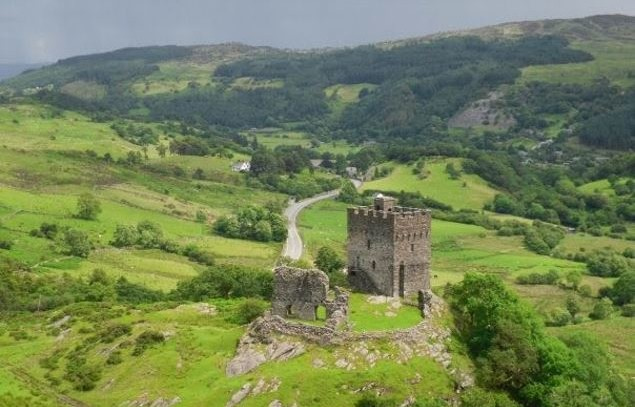
Dolwyddelan Castle, On Bryn Bella’s Doorstep
Dolwyddelan Castle stands just 6 miles from Betws-y-Coed, about a ten minute drive along the A470. Llywelyn the Great began building it sometime between 1210 and 1240. He positioned it to guard the route between the Conwy valley and Meirionnydd, and to watch over royal summer grazing land in the Lledr valley below. Edward I’s forces captured the castle in 1283 and refortified it at once. Cadw now cares for the ruins, and entry is free.
Dolbadarn Castle and the Pass to Llanberis
Llywelyn the Great also built Dolbadarn Castle, around 16 miles from Betws-y-Coed near Llanberis. It stands at the foot of the Llanberis Pass, overlooking Llyn Padarn. This single position let the princes of Gwynedd control one of the most important mountain routes in the region. Tree-ring dating later showed that Caernarfon’s builders reused timber taken from Dolbadarn. That detail says everything about how completely the balance of power had shifted.
Edward I’s Iron Ring: Castles Built to Be Supplied by Sea
Edward I took a completely different approach. After conquering Gwynedd in 1282 and 1283, he built a chain of new castles now known as the Iron Ring. Conwy, Caernarfon, Beaumaris and Harlech all sit directly on the coast or a tidal river. This was deliberate: ships could resupply each castle by sea, so a Welsh uprising could never starve out an English garrison simply by blocking the roads. Master mason James of St George oversaw the entire building programme, bringing design ideas from his native Savoy.
Edward also planted a new fortified town beside each castle, settled with English residents and closed to native Welsh people after dark. Control of the coastline meant control of trade and taxation, not just military defence.
Conwy Castle: The Iron Ring’s Closest Link to Bryn Bella
Conwy Castle sits around 19 miles from Betws-y-Coed, roughly half an hour’s drive. Edward I and James of St George built both castle and town walls in a barely believable four years, between 1283 and 1287. Its eight great towers and near complete walls still dominate the estuary today, forming part of a UNESCO World Heritage Site alongside Caernarfon and Beaumaris.
Why the Difference Still Shapes the View Today
Drive between Dolwyddelan and Conwy and the contrast becomes obvious. The Welsh castles sit quietly inland, tucked into hillsides and easy to miss from the road. The English castles dominate their towns, visible for miles and built to be seen. One style whispered control over territory. The other shouted control over trade and the sea. Both still stand today as two different answers to the same question: who owns this land?
Plan Your Own Trail of Welsh Castles Near Betws-y-Coed
Bryn Bella makes an ideal base for exploring this history firsthand. Dolwyddelan Castle suits a short morning trip, while Conwy and Caernarfon reward a full day out along the coast. Pack comfortable shoes, since several of these sites involve short, steep approaches. Book a stay at Bryn Bella and use it as your base for a self-guided castle trail spanning eight centuries of Welsh history.
Frequently Asked Questions
Which Welsh castle is closest to Betws-y-Coed?
Dolwyddelan Castle is closest, roughly 6 miles away along the A470. Llywelyn the Great built it to guard the route through the Lledr valley, and Cadw offers free entry to the ruins today.
Why did Edward I build his castles on the coast?
Coastal sites let ships resupply each castle by sea. Welsh forces could still block the mountain roads, but they could never fully cut off supplies, so English garrisons stayed secure through any siege.
Did Welsh princes build castles before the English conquest?
Yes, though not until the early 1200s. Llywelyn the Great built Dolwyddelan and Dolbadarn specifically to control mountain passes and royal grazing land, marking a shift away from the traditional, undefended Welsh courts.
Can I visit both Welsh and English castles in one day from Bryn Bella?
Yes. Dolwyddelan Castle takes under 15 minutes to reach, leaving plenty of time to continue on to Conwy Castle for the afternoon, all from a single base at Bryn Bella.