
An Autumn Break in Eryri: Betws-y-Coed at Its Best
There is a tiredness that has nothing to do with sleep. It builds from constant notifications, back to back meetings, and weekends that still seem to have somewhere to be. A long lie-in will not shift it. An autumn break in Eryri might. It asks nothing strenuous of you. Instead, it simply removes what was wearing you down. Betws-y-Coed, in October, is where that removal happens most easily.
The Season an Autumn Break in Eryri Deserves
Ask anyone who walks these hills regularly. They will tell you summer is when Eryri performs for visitors. Autumn, they will say, is when it simply is itself. Eryri National Park Authority’s own guidance confirms this: visitor numbers fall noticeably once the school holidays end. Weekdays, in particular, turn quiet. Days grow cooler too, though rarely harsh. Across an Eryri autumn, daytime temperatures typically settle into the high single figures to low teens. That is cool enough for a brisk walk, yet mild enough to linger outdoors afterwards.
Colour is the real draw. From late September into November, bracken turns copper on the hillsides. Oak and beech in the valleys shift through amber and rust. Nobody can promise the exact week it peaks; Eryri’s own weather decides that. What locals will promise is different: an October walk here brings light no summer visit can match. The trails, too, no longer feel like a queue.
Betws-y-Coed: A Village Built for Slowing Down
Long before it earned its familiar title, Gateway to Snowdonia, Betws-y-Coed was somewhere people came to look. In 1844, the painter David Cox arrived and made the Royal Oak Hotel his base. He drew fellow artists after him, in what is widely regarded as Britain’s first artists’ colony. Thomas Telford’s coaching road, now the A5, brought the first wave of Victorian travellers. The Conwy Valley railway line brought more after it. Both carried people here for the same reason visitors come today. They wanted dramatic mountain views, and the sense of stepping apart from ordinary life.
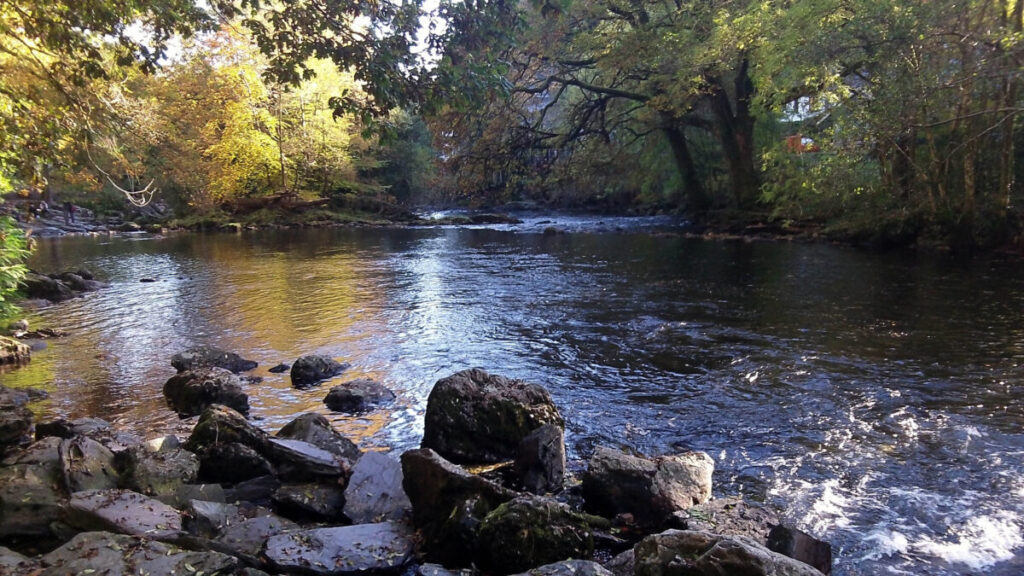
That inheritance still shapes the village. Pont y Pair, the late fifteenth century bridge, is one of the most photographed spots in North Wales. Stand on it at dusk in October. Watch the Afon Llugwy run fast beneath you, the trees on either bank turning gold. It is easy to see why painters once refused to leave. St Michael’s Old Church dates from the fourteenth century and is the oldest building in the village. It has watched over much the same view for six hundred years.
Gwydyr Forest, Llyn Elsi and Swallow Falls
The ancient Gwydyr Forest wraps three sides of the village in oak, larch and pine. Its trails range from an easy afternoon stroll to the quieter water of Llyn Elsi. This reservoir walk starts behind St Mary’s Church. It rewards fairly little effort with wide views towards the Carneddau and Glyderau ranges.
A short walk, or a two minute drive west, brings you to Swallow Falls, Rhaeadr Ewynnol. It ranks among Wales’s most visited natural sights, and carries Site of Special Scientific Interest status. Here, the Afon Llugwy tumbles over a series of rocky ledges, and autumn rain only makes the roar more dramatic. The falls stay open all year regardless. Entry costs £2, paid by coins or contactless at the turnstile. Most visitors plan for twenty minutes, yet stay rather longer.
Dark Skies Over the Valley
Darkness falls agreeably early in October, and Eryri offers something few places in Britain still can. Its International Dark Sky Reserve status makes this possible. On a clear night, once the cloud clears and the village lights dim, the stars above the valley are extraordinary. It is the kind of sky that city living quietly steals from most of us.
What an Autumn Break at Bryn Bella Looks Like
None of this looks like much, which is exactly the point. Waking without an alarm counts, watching mist lift off the river from a hillside terrace, coffee in hand. So does a full Welsh breakfast eaten slowly, rather than at a desk. Choosing the shorter forest walk because the light through the beech trees is worth standing still for counts too. A fire in the evening does as well, because nothing pulls you back to a screen.
At Bryn Bella, we have built our five ensuite rooms around exactly this kind of stay. Each comes with a hillside terrace view, and a full Welsh breakfast starts every unhurried day. Guests staying direct also get private on site parking, garage space for bikes and motorbikes, and electric vehicle charging. For ideas beyond the village, our guide to things to do in Betws-y-Coed is worth a look. It covers the walks, waterfalls and adventure days that fill the gaps between slow mornings. Book direct with us this autumn. Let the mountains do what modern life rarely allows: nothing much at all, and everything that matters.
Frequently Asked Questions
When is the best time to see autumn colour near Betws-y-Coed?
Colour typically builds from late September and continues into November. Gwydyr Forest’s bracken and beech usually look richest in October.
Is Swallow Falls open during an autumn break?
Yes. Swallow Falls stays open all year, with turnstile entry available around the clock. Disabled access, though, only runs from April to October.
Do I need a car for an autumn break in Eryri?
Not necessarily. Betws-y-Coed sits on the Conwy Valley railway line. The Snowdon Sherpa S1 and T10 buses reach Swallow Falls and the wider park. Guests who do drive get private parking on site at Bryn Bella.
Is Betws-y-Coed good for stargazing in autumn?
Very much so. Eryri holds International Dark Sky Reserve status. October’s earlier sunsets, combined with clear post-walk skies, make it a rewarding season for stargazing.